Does Red Light Therapy Help Cataracts?

There is no evidence that red light therapy treats or reverses cataracts, and we grade this Insufficient. A cataract is a physical clouding of the eye’s lens, and nothing applied as light has been shown to clear it. The only proven treatment is surgery to replace the lens. We say this plainly because cataracts are common, the search for a non-surgical fix is understandable, and the claims that red light dissolves them are not supported. This review explains the honest picture and where light therapy genuinely fits.
It is an evidence summary, not medical advice. We sell no hardware and grade the evidence as we find it.
Quick verdict
No published evidence supports red light therapy as a treatment for cataracts, and there is no mechanism by which it would clear a clouded lens. We grade it Insufficient. A cataract is structural protein change inside the lens, and the established, highly effective fix is cataract surgery. Light therapy is not an alternative to that.
What is a cataract?
A cataract is a clouding of the lens inside the eye, the clear structure that focuses light onto the retina. Over time, the proteins in the lens break down and clump together, scattering light and making vision blurry, dim, or yellowed (National Eye Institute).
Most cataracts develop slowly with age and are extremely common later in life. The important point for this question is that a cataract is a physical change in the lens material itself, not a problem of cells running low on energy, which is the only thing red light therapy is designed to influence.
Why red light therapy does not treat cataracts
Red light therapy works through photobiomodulation, in which red and near-infrared light is absorbed by mitochondria to support cellular energy (Gaspari et al., 2024). That mechanism is about cell function, and it is why light therapy is studied in conditions involving stressed or aging cells.
A cataract is a different kind of problem. The clouding comes from clumped, damaged proteins in the lens, and no amount of cellular energy support unclumps them or makes the lens clear again. There is no published trial showing red light therapy improves cataracts, and no plausible pathway by which it would reverse the structural change. Claims that it dissolves or reverses cataracts are not supported by evidence.
The only proven treatment
The established treatment for a cataract that affects your vision is surgery, in which the clouded lens is removed and replaced with a clear artificial one. It is one of the most common and successful procedures in medicine, and it directly fixes the structural problem that glasses, drops, or light cannot (National Eye Institute).
In the earlier stages, before surgery is warranted, stronger glasses and better lighting can help you manage. What does not exist is a drop, supplement, or light device proven to reverse a cataract, which is why an eye exam, not a consumer gadget, is the right response to worsening vision.
Can you lower your cataract risk?
While you cannot reverse a cataract with light or anything else short of surgery, you can take sensible steps that are associated with eye health and slower lens damage. Protecting your eyes from ultraviolet light with sunglasses, not smoking, managing conditions like diabetes, and keeping up with eye exams are the measures eye-care bodies emphasize (National Eye Institute).
None of these involve red light therapy, and none promise to undo a cataract once it forms. They are about reducing risk and catching changes early, which is a more honest framing than any device that claims to clear a clouded lens. If you already have a cataract affecting your vision, prevention advice no longer applies and the conversation shifts to whether and when to consider surgery.
Where light therapy does have a role
It is worth being clear that red light therapy is not useless for the eyes; it is simply the wrong tool for cataracts. It has supportive evidence for dry eye and is studied for retinal conditions like age-related macular degeneration, areas we cover in our research reviews. Someone can reasonably use light therapy for those purposes while understanding it does nothing for a cataract. The error is expecting one therapy to address an unrelated structural problem.
Frequently asked questions
Can red light therapy reverse cataracts?
No. There is no evidence it does, and no mechanism by which it could, because a cataract is clumped protein in the lens rather than a cellular-energy problem that photobiomodulation acts on (Gaspari et al., 2024).
Is there any non-surgical cure for cataracts?
No proven one. Stronger glasses and better lighting help in the early stages, but the only treatment that removes a cataract is surgery to replace the lens (National Eye Institute).
Why do people claim red light helps cataracts?
Because red light therapy has real evidence for some eye conditions, and that reputation gets stretched to unrelated ones. The absence of any cataract trial is the tell that the claim is marketing rather than science.
Is cataract surgery safe?
Cataract surgery is one of the most common and successful operations in medicine, and your surgeon can explain the specifics for your eyes (National Eye Institute). An eye exam is the right next step if a cataract is affecting your vision.
Does red light therapy help any eye condition?
Yes, several. It has supportive evidence for dry eye and is studied for retinal conditions, covered in our research reviews. Cataracts are not among them.
The bottom line
Red light therapy does not treat or reverse cataracts, and we grade the evidence Insufficient, because a cataract is a structural clouding of the lens that light has no way to clear. The proven, highly effective treatment is cataract surgery, and worsening vision deserves an eye exam rather than a consumer device. For the conditions where light therapy does have evidence, see our research reviews and our photobiomodulation for eye health overview.
This review is an educational summary of published evidence. It is not medical advice and does not create a doctor-patient relationship. Always talk to a qualified eye-care professional about changes in your vision.
More from the Institute
 Promising
Does Red Light Therapy Help Myopia in Children?
Repeated low-level red light slowed myopia progression in children in trials, but it carries real retinal-safety questions. The honest evidence,…
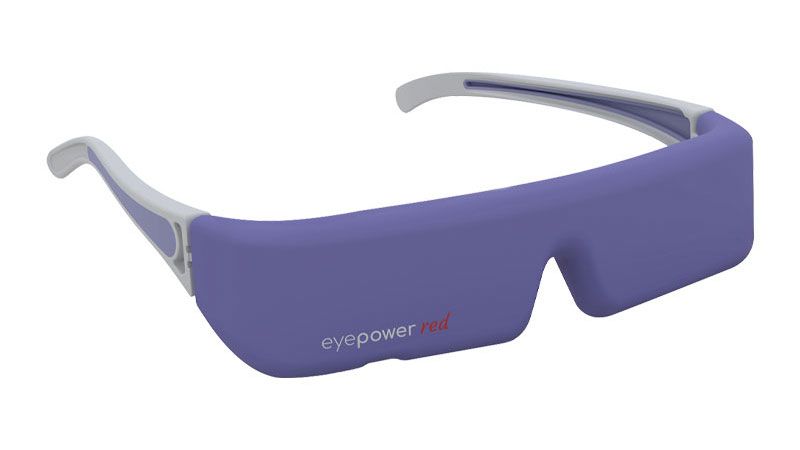
Red Light Therapy Glasses and Goggles for Eyes (2026)
A plain guide to red light therapy glasses and goggles: how the format differs from masks, what to look for,…
 Insufficient
Does Red Light Therapy Help Eye Strain?
There is little direct evidence that red light therapy treats digital eye strain. Here is the honest picture, why the…