Is Red Light Therapy Safe During Pregnancy?

The honest answer is that red light therapy appears low-risk but has not been specifically studied in pregnancy, so the right move is to check with your doctor before using it. Red and near-infrared light has a good general safety record and does not penetrate deeply enough in cosmetic facial use to reach a pregnancy, but the absence of pregnancy-specific research means caution is warranted, especially for anything beyond cosmetic skin care. This guide explains what is known, what is not, and how to make a sensible decision.
This is general educational information, not medical advice, and pregnancy is exactly the situation where your own clinician’s guidance outweighs any general article. We sell no hardware.
Is red light therapy safe during pregnancy?
There is no evidence that red light therapy is harmful in pregnancy, but there is also no good evidence proving it is safe, because pregnant people are routinely excluded from the studies. Red and near-infrared light itself has a reassuring safety profile, with a review of photobiomodulation finding no adverse effects at typical therapeutic doses (Gaspari et al., 2024). The gap is not a red flag; it is simply unstudied territory, which is why the standard advice is to ask your doctor.
What the evidence does and does not cover
What the evidence supports is that red light therapy works through a gentle, non-thermal effect on cells and does not carry the damage risk of stronger light, with no consistent adverse effects reported at the doses used (Gaspari et al., 2024). For cosmetic facial and eye-area use, the light is absorbed in the skin and does not reach anywhere near a developing pregnancy.
What the evidence does not cover is pregnancy directly. No trials have set out to test red light therapy in pregnant participants, so any claim that it is definitely safe, or definitely unsafe, in pregnancy is going beyond the data. This is the normal situation for most wellness treatments in pregnancy, and it calls for caution rather than alarm.
Why caution still makes sense
Two practical reasons support a careful approach. First, the precautionary principle is the default in pregnancy: when something is unstudied, the conservative choice is to involve your clinician rather than assume it is fine. Second, dose and heat matter. Light therapy follows a biphasic curve where more is not better (Huang et al., 2009), and some devices add warmth, so keeping to gentle, low-dose, localized use is more sensible than whole-body or high-intensity sessions during pregnancy.
None of this means a cosmetic facial device is dangerous. It means the prudent path is to clear it with the person managing your pregnancy, who can weigh your specific situation.
Cosmetic face use versus whole-body use
The type of use changes the calculus. Cosmetic red light on the face or around the eyes is the lowest-concern scenario, since the light stays in the skin far from the pregnancy and the doses are modest. Whole-body panels, abdominal use, or high-intensity treatments are where caution should rise, both because of the larger dose and because the abdomen is the area to leave alone without medical advice.
If you simply want to continue a cosmetic facial routine, that is the conversation to have with your doctor, and it is usually a short one. Using red light to treat a medical condition during pregnancy is a different and bigger conversation that belongs entirely with your clinician.
What to do
The sensible sequence is straightforward. Tell the professional managing your pregnancy what device you have and how you use it, and follow their guidance. Favour gentle, localized, cosmetic use over whole-body or high-dose sessions, avoid the abdomen without specific medical advice, and do not start red light therapy as a treatment for any condition while pregnant without your clinician’s sign-off.
If your goal is eye health rather than skin, the same rule applies, and our eye-safety guide covers the broader contraindications that are worth reviewing in any case.
What about breastfeeding and after birth?
The same logic carries into breastfeeding and the postpartum period: red light therapy has a reassuring general safety profile but little condition-specific study in this group, so cosmetic facial use is the lowest-concern scenario and anything more is worth a quick check with your clinician. Localized skin use does not enter the bloodstream or milk in any meaningful way, which is part of why cosmetic use is generally treated as low-risk once you are no longer pregnant.
As always, the sensible defaults hold: keep sessions gentle and localized, follow the device’s dose limits, and raise anything beyond routine cosmetic use with your doctor. If you paused red light therapy during pregnancy, resuming it afterward is usually a straightforward conversation.
Frequently asked questions
Can I use red light therapy on my face while pregnant?
Cosmetic facial use is the lowest-concern scenario because the light stays in the skin, and red light has no adverse effects reported at typical doses (Gaspari et al., 2024). It still has not been studied in pregnancy, so confirm with your doctor first.
Is red light therapy proven safe in pregnancy?
No. It has a good general safety record, but pregnant people are excluded from the studies, so there is no pregnancy-specific proof either way. That uncertainty is the reason to ask your clinician.
Should I avoid red light therapy on my belly during pregnancy?
Yes, as a default. Avoid abdominal and whole-body use without specific medical advice; cosmetic facial or eye-area use is the lower-concern scenario.
Why is dose important during pregnancy?
Because light therapy is biphasic and more is not better (Huang et al., 2009), and some devices add heat. Gentle, low-dose, localized use is more prudent than intensive sessions while pregnant.
Who should I ask?
The professional managing your pregnancy, such as your obstetrician or midwife. Bring the device details and how you use it, and follow their specific guidance over any general article.
The bottom line
Red light therapy appears low-risk, especially for cosmetic facial use, but it has not been studied in pregnancy, so the honest position is to treat it as unstudied and clear it with your doctor before use. Keep any use gentle, localized, and away from the abdomen, and never use it to treat a condition in pregnancy without medical sign-off. For the wider safety picture, see our eye-safety guide, and for how red light therapy works in general, our photobiomodulation overview.
This guide is an educational review of published evidence. It is not medical advice and does not create a doctor-patient relationship. Always talk to the professional managing your pregnancy before starting any light-based therapy.
More from the Institute
How to Get Rid of a Stye (and When to See a Doctor)
How to get rid of a stye fast and safely: the warm-compress routine that works, what to avoid, what causes…
 Insufficient
Does Red Light Therapy Help Presbyopia?
Red light therapy cannot reverse presbyopia, the age-related stiffening of the lens. Here is what the evidence says, why the…
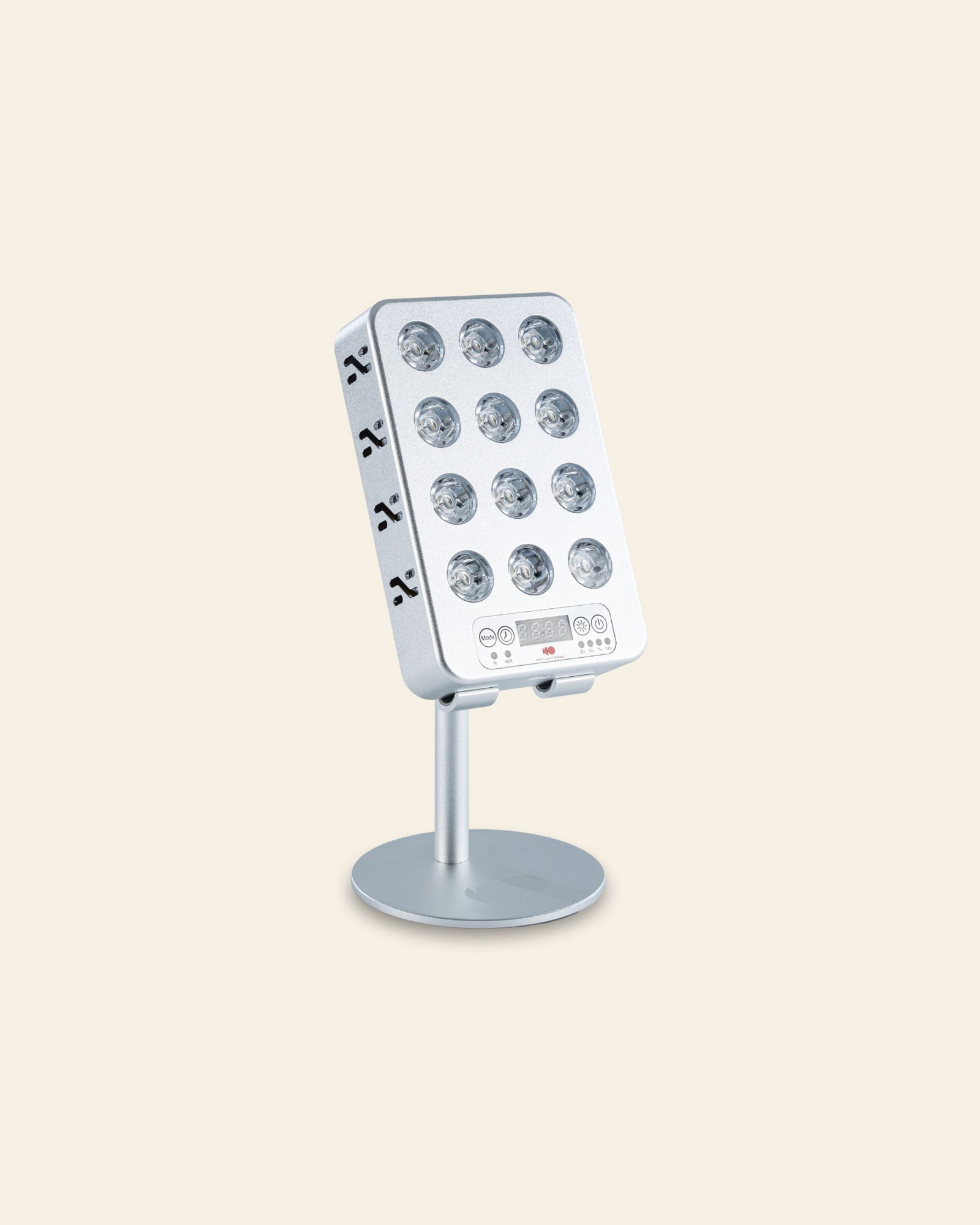
Best Red Light Therapy Devices for Eyes (2026)
An independent, evidence-based comparison of 13 red light therapy devices for the eyes, from at-home masks to clinic systems, with…