Best Red Light Therapy Devices for Eyes (2026)
If you have gone looking for a red light therapy device for your eyes, you have probably hit the same wall most people do. The results throw a fifteen-dollar flashlight and a nine-thousand-dollar clinic course onto the same page, every product claims to be the best, and almost nobody explains which one is right for you. It is genuinely confusing, and the stakes are not trivial. Your eyes are delicate, the dose of light matters a great deal, and the wrong device wastes your money or, worse, your hope.
This is the most thorough, genuinely independent guide we know how to write. We review every device worth knowing about, starting with the ones you can buy and use at home, then the clinic-grade systems you would reach through an eye doctor. For each one you get a real product photo, the plain-English rundown, honest pros and cons, who it suits, and where to find it. We also fill in what almost every other guide leaves out: which uses are not supported by evidence, the actual safe dose, who should not use these devices at all, and how red light compares to proven medical treatments.
Which eye red light device is best for you? Our quick picks
- Best at-home all-rounder: Spectral WaveFront. Two wavelengths (670nm and 810nm), separate dry-eye and macular modes, one-time cost.
- Best budget home glasses: Eyepower Red. A low-cost, single-wavelength device tied to the University College London research.
- Best clinician-guided home device for dry eye: my-mask (Espansione), with real device-specific studies behind it.
- Best clinic option for dry AMD: Valeda, the only device the FDA has authorized for an eye condition.
- Best clinic option for dry eye and MGD: eye-light, which pairs light therapy with intense pulsed light.
- Best to skip: body-panel torches aimed at the face, and the Noctura 400, which failed its major trial.
Full comparison: 13 ocular light devices at a glance
| Device | Where used | Wavelengths | Per session | Best-supported use | Evidence strength | Regulatory | Price |
|---|---|---|---|---|---|---|---|
| Spectral WaveFront | Home | 670 + 810nm | 16 to 21 min | Dry eye, MGD, retinal support | Moderate (mapped to studies) | Wellness device | ~$289 one-time |
| Arunalight | Home | 670nm | 3 min, alt days | Retinal support | Weak (no device trial) | Consumer wellness | ~$340 |
| Eyepower Red | Home | 670nm | 3 min weekly | Retinal aging | Weak (no device trial) | Consumer wellness | ~$110 |
| Acu-Red | Home | 670nm | Short sessions | Retinal aging | Weak (no device trial) | Consumer wellness | ~$300 to 400 |
| my-mask | Home (clinician-set) | ~630nm | 17 min | Dry eye, MGD | Good (device studies) | CE-marked | Clinic-set |
| meibomask | Home or clinic | 630nm + NIR | 15 min | MGD, dry eye | Good (device studies) | CE-marked | Clinic-set |
| Target Light 3.0 | Home (body device) | 660 / 810 / 850nm | Distance-based | General body PBM | None for eyes | Wellness device | ~$360 |
| Sofirn deep-red torch | Home (DIY) | 670nm | DIY protocol | Retinal aging (DIY) | None (not medical) | Consumer flashlight | ~$15 to 30 |
| Noctura 400 | Home (overnight) | ~505nm green | Worn nightly | Diabetic macular edema | Failed phase 3 trial | CE-marked | ~£250 / 12 wks |
| Mnemosline | Home | 650nm pulsed | 10 min, 2x daily | Stargardt disease | Weak (one open study) | CE-marked | EU only |
| Valeda | Clinic | 590 / 660 / 850nm | ~4 min/eye | Dry AMD | Strong (phase 3 RCT) | FDA-authorized | Clinic, recurring |
| eye-light | Clinic | 590 / 630nm + IPL | 12 to 15 min | Dry eye, MGD | Good (device studies) | CE-marked | ~$150 to 300/session |
| Tixel | Clinic | None (heat) | ~2 min | MGD (heat, not light) | Good (cleared for MGD) | FDA-cleared | Clinic, per session |
Specifications are manufacturer-reported and approximate (early 2026). Prices and protocols vary by region; the “Check price” links below go to each maker. For a full price breakdown across formats, see our cost and value guide.
How we evaluated these devices
We score every device the same way the Institute grades any therapy: on the evidence and the engineering, never on the marketing. Seven things decide where a device lands.
- Wavelengths, and whether they match the bands used in published eye research, usually 670nm red and 810nm near-infrared.
- Dose, meaning the intensity and per-session energy at the eye, and whether that dose is actually controlled.
- Eye-specific design, a device built and shaped for the eyes versus a body gadget pointed at your face.
- Evidence, where trials on the device itself outrank a dose merely mapped to general research.
- Warmth for clogged glands, since gentle heat near 39°C helps with dry eye and meibomian gland dysfunction.
- Cost, and whether you pay once or forever.
- Regulatory status, an authorized or cleared medical device versus a wellness product.
Three commitments make this guide different from most “best device” pages. We are independent and unpaid: the Institute sells no hardware, and the Spectral WaveFront is judged on the same seven criteria as everything else, not handed the win. We report what does not work as plainly as what does, including a device that failed its pivotal trial. And every health claim below links to a peer-reviewed study or a regulator, so you can check our work.
Image note: product photos belong to the manufacturers and are shown for identification; they would be licensed or credited before any public launch. The illustrative red-light images used for a few hard-to-source devices are labelled as such.
At-home devices worth considering
These are the devices you can order, unbox, and use yourself. They are sold as wellness devices rather than medical treatments, which keeps them accessible but also means the dose and the claims deserve a careful eye. Start here if you want ongoing support for tired, dry, or aging eyes without booking appointments.
1. Spectral WaveFront: Best at-home all-rounder
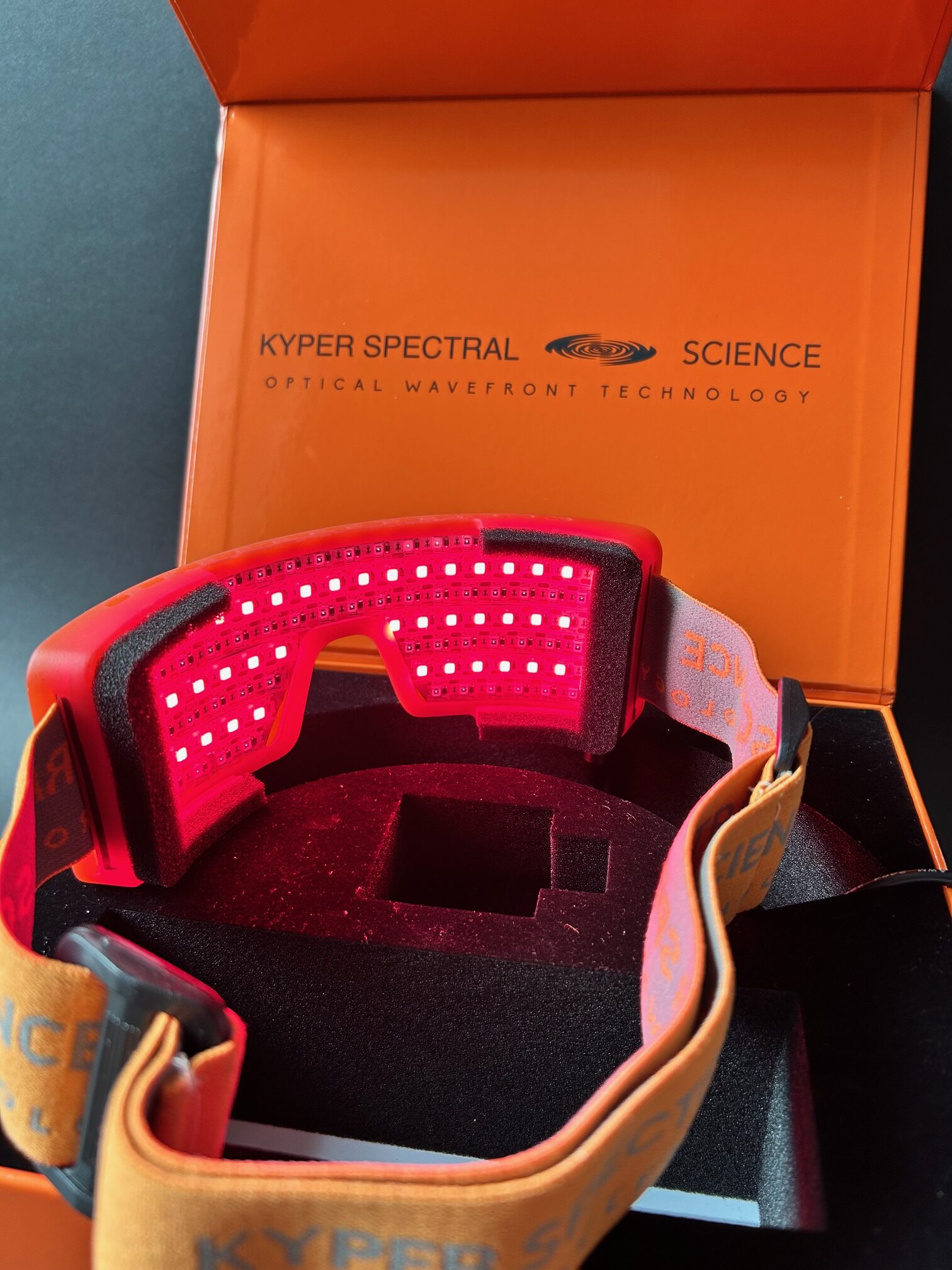
The Spectral WaveFront is the most capable take-home device on this list, and the one we would point most people to first. It is a full-face mask that delivers two wavelengths at once, 670nm red and 810nm near-infrared, with separate timed modes for the macula and for dry eye, plus gentle built-in warmth near 39°C that helps loosen the oils in your eyelids. The 670nm figure is not arbitrary: it is the wavelength University College London researchers used when a single morning exposure improved colour-contrast sensitivity by up to 20% in people aged roughly 40 and over (Shinhmar et al., Scientific Reports 2021).
The honest caveat, and the reason it is a wellness device rather than an authorized treatment, is that its evidence is aligned to existing photobiomodulation studies rather than generated by its own published trial. The maker reports favourable in-house tear-film data, but that is not the same as independent peer review.
Pros
- Two wavelengths in one take-home device
- One-time cost, no subscription
- Dedicated dry-eye and macular modes plus lid warming
Cons
- Evidence is mapped to studies, not its own trial
- Wellness device, not FDA-authorized
- Fixed modes offer less customization than a clinic
It suits someone who wants daily, low-effort support for dry eye, blocked glands, or general retinal aging, and who understands it supports eye health rather than curing anything.
Top pick (at-home) The most capable device you can own outright.
Check price at Kyper Read our full review
2. Arunalight: Best budget home glasses
Arunalight is a glasses-style emitter that shines 670nm light at a fairly high intensity for short, eyes-closed sessions every other day. It is a reasonable step down from a dual-wavelength mask if you only care about general retinal support. The trade-off is simplicity: a single wavelength, no near-infrared, and no eyelid warming for dry eye. Its rationale rests on the general 670nm literature rather than any trial of the device itself (Shinhmar et al., Scientific Reports 2021).
Pros
- Cheaper than a dual-wavelength mask
- Quick, simple sessions
- Uses the well-studied 670nm band
Cons
- Single wavelength, no near-infrared depth
- Weak for dry eye and clogged glands
- No device-specific clinical trials
It suits a budget-minded buyer focused on everyday retinal support who does not need dry-eye features.
Budget pick Fine for retinal support, weak for dry eye.
Check price at Arunalight See the AMD evidence
3. Eyepower Red: Best low-cost, research-aligned option
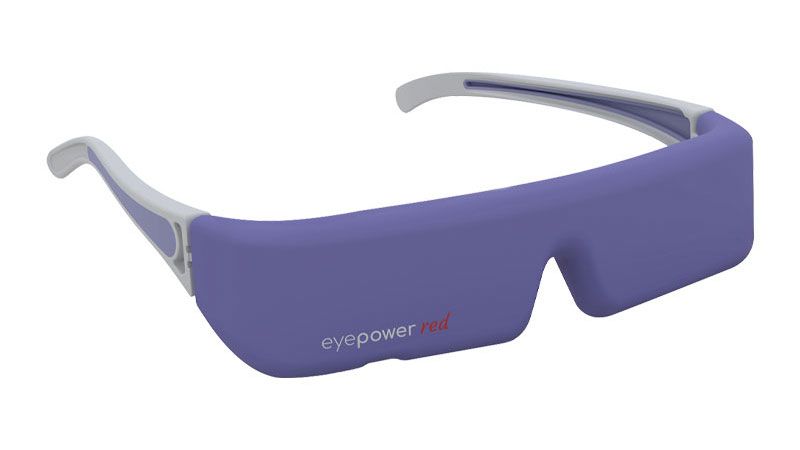
Eyepower Red is the value choice among the simple 670nm devices. It is a compact pair of deep-red glasses developed in the UK in association with University College London ophthalmology researchers, and at around $110 it is the cheapest device here that is actually built for the eyes. Like the others in this tier it is single-wavelength and leans on the general 670nm research rather than a trial of the product itself (Shinhmar et al., Scientific Reports 2021).
Pros
- Lowest cost of any eye-specific device here
- Conservative, evidence-aligned claims
- Academic association adds credibility
Cons
- Single wavelength only
- No dry-eye warmth
- No device-specific trial
It suits a cautious first-time buyer who wants the cheapest sensible way to try 670nm at home.
Best value The cheapest device genuinely built for eyes.
Check price at Eyepower See the AMD evidence
4. Acu-Red: Capable hardware, over-broad claims
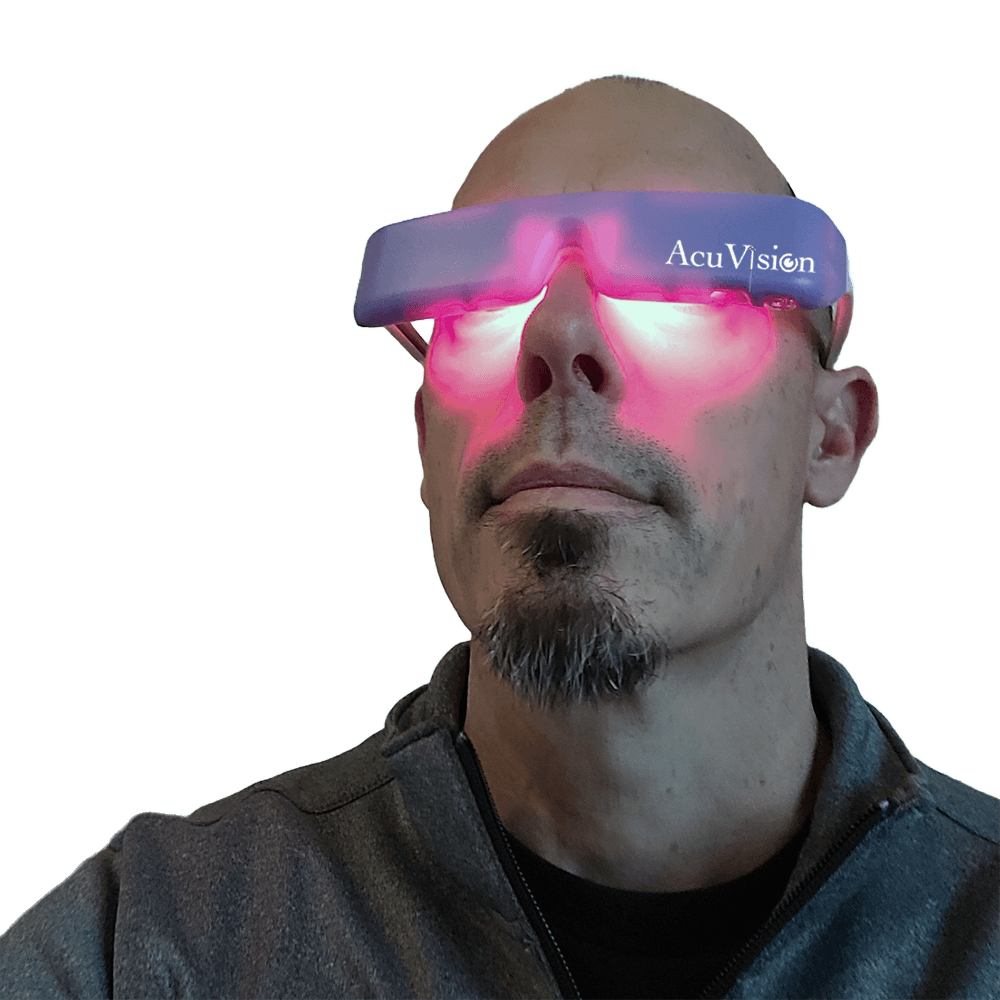
Acu-Red is another 670nm glasses-style device, but it earns a caution for its marketing rather than its hardware. The product is promoted for a long list of serious conditions, including macular degeneration, glaucoma, retinitis pigmentosa, and diabetic retinopathy. There is no device-specific trial supporting those claims; the evidence base is the same general 670nm research every consumer device cites (Shinhmar et al., Scientific Reports 2021). Treat the broad disease claims with healthy skepticism.
Pros
- Standard 670nm wavelength
- Simple wearable format
Cons
- Markets broad disease claims with no device trial
- Pricier than better-supported glasses
- Single wavelength only
It suits a buyer who wants 670nm glasses but is willing to ignore the marketing and judge it as a general wellness device.
Caution on claims Fine hardware, overstated promises.
Check price at Eye Health Institute See the glaucoma evidence
5. my-mask: Best clinician-guided home dry-eye device
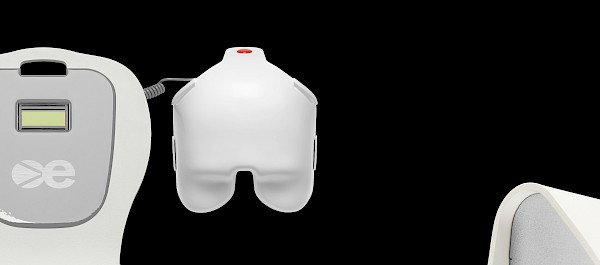
my-mask is the home device with the most credible dry-eye evidence behind it. Made by Espansione, it is a portable low-level light therapy mask that an eye clinic configures for you, then you use at home. A prospective study of serial home sessions reported improvements in dry-eye symptoms, tear break-up time, and tear volume (Giannaccare et al., 2022). That it was studied as an actual device, not just a wavelength, sets it apart from the consumer glasses above.
Pros
- Real device-specific dry-eye study
- Clinician sets your protocol
- Home convenience with oversight
Cons
- Not sold directly to patients
- Single visible wavelength
- Limited availability outside the EU
It suits a dry-eye patient who wants home treatment with a clinician guiding the dose.
Strong for dry eye Evidence-backed, clinician-guided home use.
Learn more at Espansione See the dry-eye evidence
6. meibomask: Best home mask for meibomian gland dysfunction

meibomask is Espansione’s standalone low-level light therapy mask, built around the same technology as their clinic system and aimed squarely at meibomian gland dysfunction and dry eye. The strongest supporting data come from a randomized comparison of this low-level light therapy against intense pulsed light, where the light-therapy approach produced meaningful symptom and tear-film gains (Giannaccare et al., 2023).
Pros
- Strong MGD and dry-eye evidence
- Severity-customised dosing
- Same proven technology as the clinic system
Cons
- Not tested for retinal conditions
- Mostly EU and UK availability
- Pricing set through clinics
It suits someone whose main problem is blocked glands and who wants a mask with real condition-specific data.
Strong for MGD Purpose-built and evidence-backed for dry eye.
Learn more at Espansione See the dry-eye evidence
At-home devices to approach with caution
The next four are easy to find and often marketed for the eyes, but each has a real problem: no eye-specific design, no usable dose, a failed trial, or evidence too thin to recommend. We include full write-ups so you can see exactly why.
7. Target Light 3.0: A body panel, not an eye device
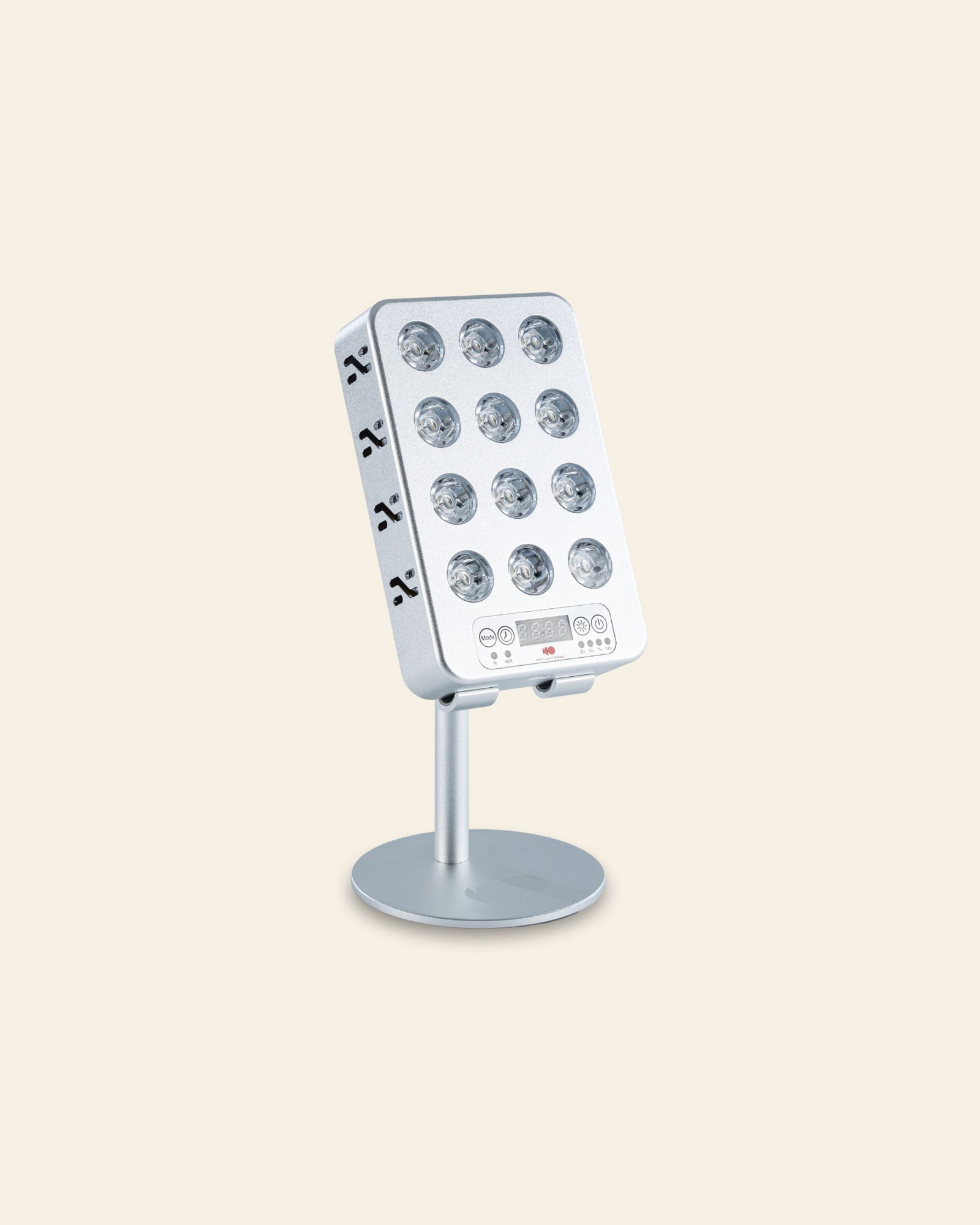
The Target Light 3.0 is a well-made handheld red light panel from Red Light Rising, but it is a general body device, not an eye product. It has no fixed eye geometry and publishes no ocular dose, which matters because a comprehensive review of photobiomodulation in ophthalmology stresses that controlled, eye-appropriate dosing is what makes ocular light therapy safe and effective (Gaspari et al., 2024). Pointed at your face from a guessed distance, the dose reaching your retina is unknown.
Pros
- Solid general-purpose body panel
- Multiple wavelengths
Cons
- No eye-specific design or dose
- No ocular evidence at all
- Wrong tool for treating the eyes
It suits someone who wants a body red light panel, not someone trying to treat their eyes.
Not for eyes A good body device, but not an eye device.
Check price at Red Light Rising Read our eye-safety guidance
8. Sofirn deep-red torch: The DIY route, with real caveats
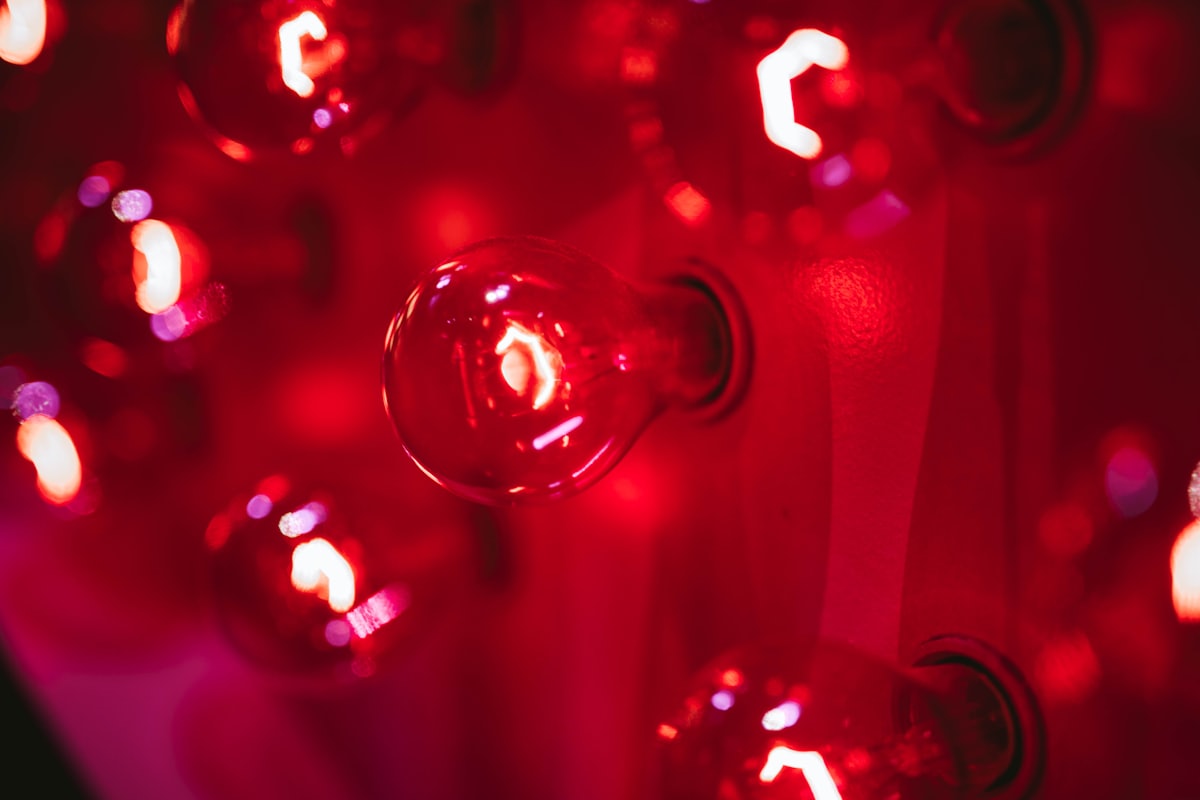
A 670nm flashlight like the Sofirn deep-red torch is the cheapest possible way to copy the University College London self-experiments, and some enthusiasts do exactly that. It is not a medical device, the wavelength accuracy of a generic torch is unverified, and there is no built-in dose control. Because the benefit of light therapy follows a biphasic curve where too much light cancels the benefit, an uncalibrated torch held at a guessed distance is a genuine risk, not a bargain (Huang et al., Dose-Response 2009).
Pros
- Extremely cheap
- Uses the 670nm band from the research
Cons
- Not a medical device, unverified output
- No dose control or eye geometry
- Easy to overdose your eyes
It suits only a well-informed tinkerer who accepts the risks; most people should choose a purpose-built device.
DIY only Cheap, but uncontrolled and risky for eyes.
Where to find it Read our eye-safety guidance
9. Noctura 400: Failed its big trial
The Noctura 400 is a green-light sleep mask that works by a completely different mechanism from red light therapy, aiming to prevent the eye from dark-adapting overnight in diabetic eye disease. It is included here because people confuse it with red light devices. The honest reason to skip it for these uses is that its pivotal CLEOPATRA trial found no benefit for diabetic macular edema over two years, alongside poor adherence (Lancet Diabetes & Endocrinology 2018).
Pros
- A real, regulated medical device
- Studied in a large trial
Cons
- Failed its primary endpoint
- Not red light therapy at all
- Sleep disturbance hurt adherence
It does not suit anyone looking for red light therapy benefits, and the evidence does not support it for its own intended use either.
Skip Different mechanism, and it failed its trial.
Learn more at Noctura See the diabetic-eye evidence
10. Mnemosline: Niche, for Stargardt research only
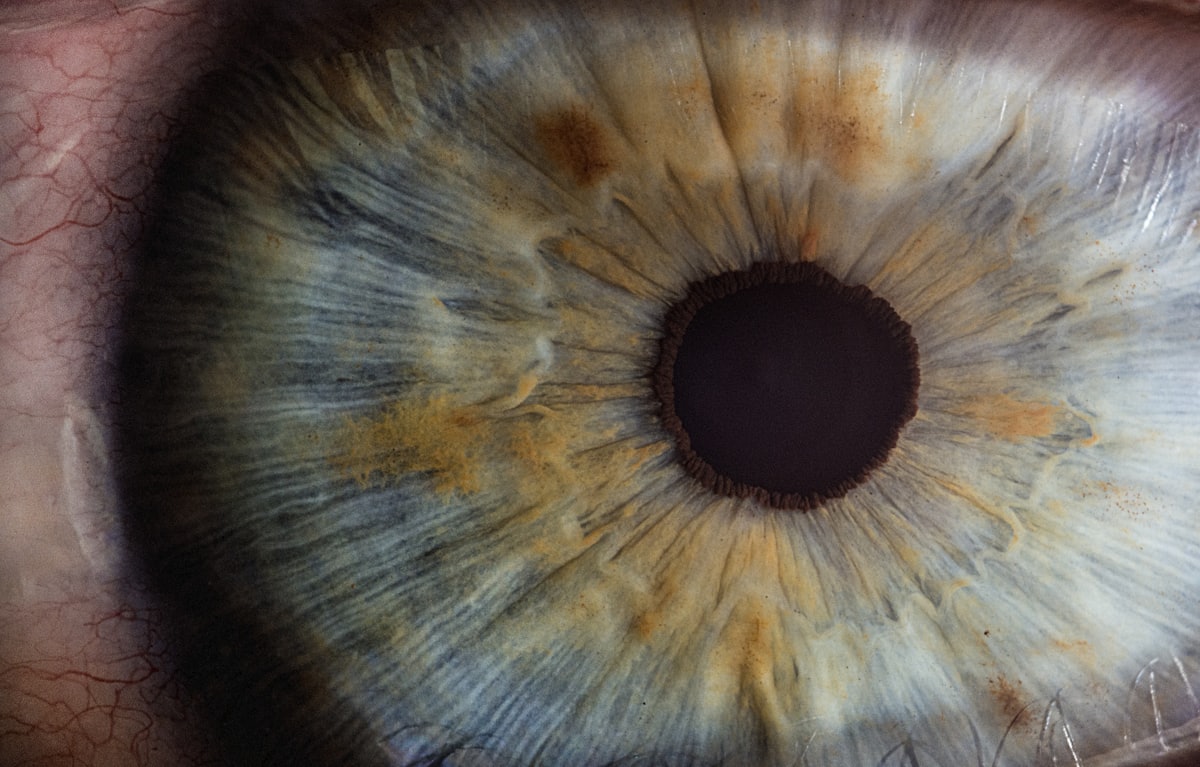
Mnemosline is a 650nm pulsed-light eyewear from an Italian maker, studied almost exclusively for Stargardt disease, a rare inherited macular dystrophy. A single open-label study reported visual and retinal-function improvements over a year (Scalinci et al., 2022). That is encouraging for a condition with few options, but an open-label study without a sham control is weak evidence, and the device is not relevant to dry eye or typical age-related macular degeneration.
Pros
- Targets a condition with few options
- A regulated device with a published study
Cons
- Single open-label study, no sham control
- Heavy daily time commitment
- Not for dry eye or common AMD
It suits only people specifically researching options for Stargardt disease, ideally with a specialist.
Niche Promising for one rare disease, weak evidence overall.
Learn more at Mnemosline Browse our research reviews
Clinic-grade devices (talk to your eye doctor)
A heads-up before this section. The next three devices are not something you order online and use at home. They are administered in a clinic by an eye-care professional, and access depends on your provider, your country, and in some cases your diagnosis. They may simply not be available to you, and that is fine. Treat what follows as background for a conversation with your optometrist or ophthalmologist, who can tell you whether a clinic device makes sense for your eyes and where to find one.
11. Valeda: Best clinic option for dry AMD
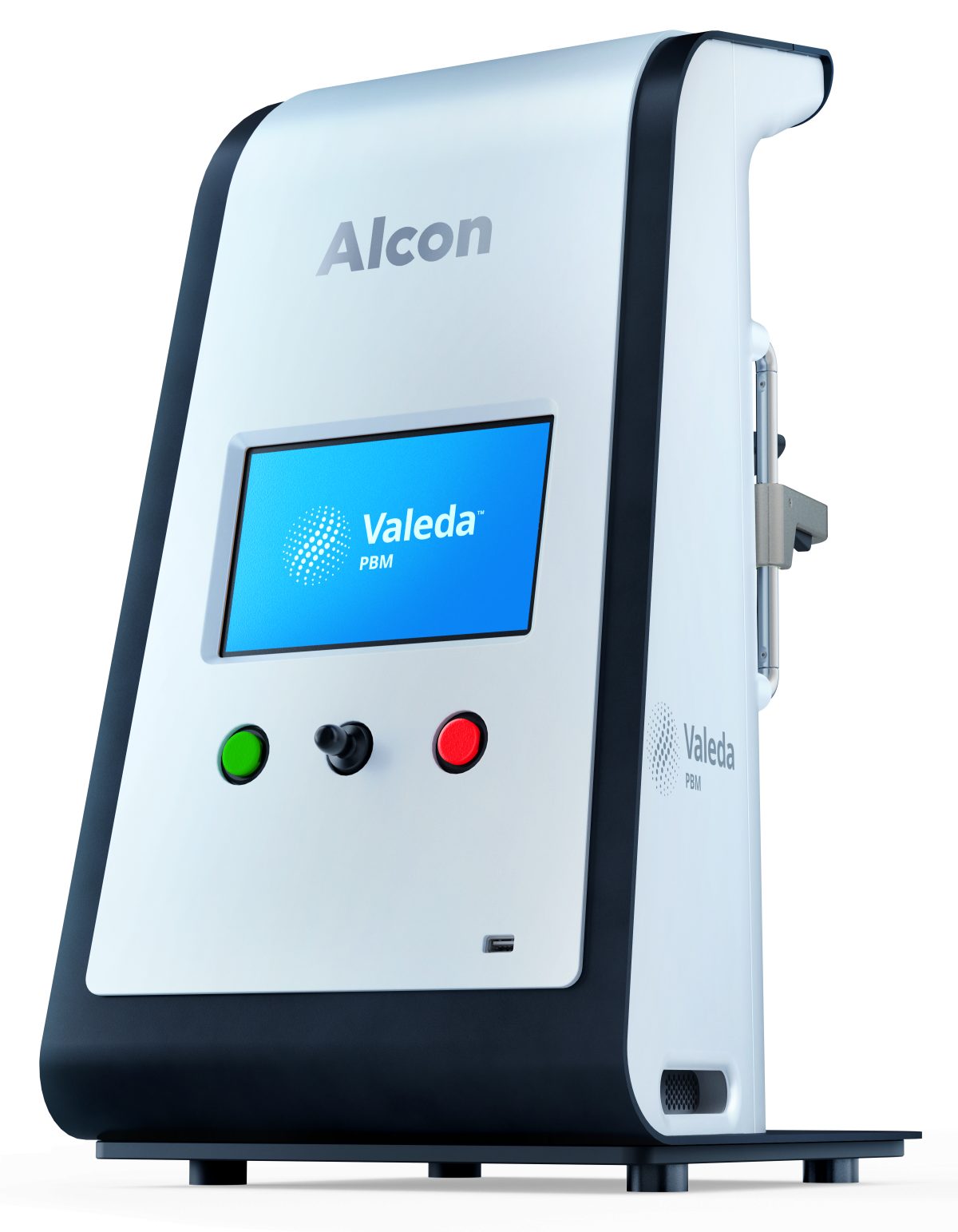
For dry age-related macular degeneration, Valeda is in a class of its own, because it is the only eye light device with real regulatory backing. In November 2024 the FDA authorized it as the first device-based therapy for the condition (FDA, 2024).
That decision rested on the LIGHTSITE III randomized controlled trial, which reported a meaningful gain in best-corrected vision and a slower onset of new geographic atrophy in treated eyes (Retina 2024). The catch is access and cost: Valeda lives in a clinic, the treatment runs as repeated multi-week courses, and the yearly cost runs into the thousands.
Pros
- Only device with FDA authorization for an eye condition
- Strongest evidence on this list
- Calibrated, clinician-delivered dose
Cons
- Clinic-only, repeated courses
- High recurring annual cost
- Availability depends on finding a provider
It suits a person with diagnosed early-to-intermediate dry AMD who wants the most evidence-backed option and can attend in-office sessions. For how it stacks up against the at-home masks here, see our Valeda comparison.
Best clinic option (AMD) The evidence and regulatory leader.
Find a provider Valeda vs other devices
12. eye-light: Best clinic option for dry eye and MGD
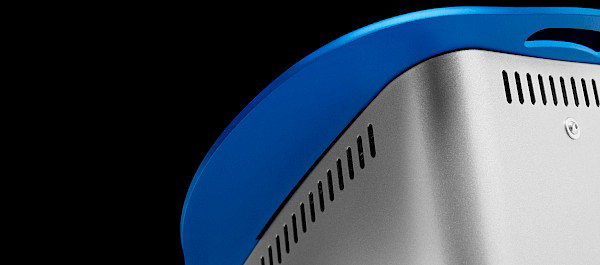
When the problem is dry eye driven by blocked oil glands, eye-light is the clinic device with the most evidence behind it specifically. Made by Espansione and distributed widely, it pairs low-level light therapy with intense pulsed light in the same visit, and randomized data on this kind of combined light approach reports real gains in tear stability and symptoms (Giannaccare et al., 2023).
The broader picture supports it too: a systematic review and meta-analysis found intense pulsed light produces meaningful improvements in dry-eye symptoms, while noting the field needs better-standardised protocols (Peira et al., 2025).
Pros
- Strongest clinic evidence for dry eye and MGD
- Combines two treatments in one visit
- Delivered and monitored by a clinician
Cons
- Requires repeated in-office sessions
- Per-course cost adds up
- Not available for home use
It suits a dry-eye or MGD patient who prefers hands-on, clinician-delivered care.
Best clinic option (dry eye) The most evidence-backed in-office choice.
Learn more at Espansione See the dry-eye evidence
13. Tixel: An FDA-cleared dry-eye device (heat, not light)
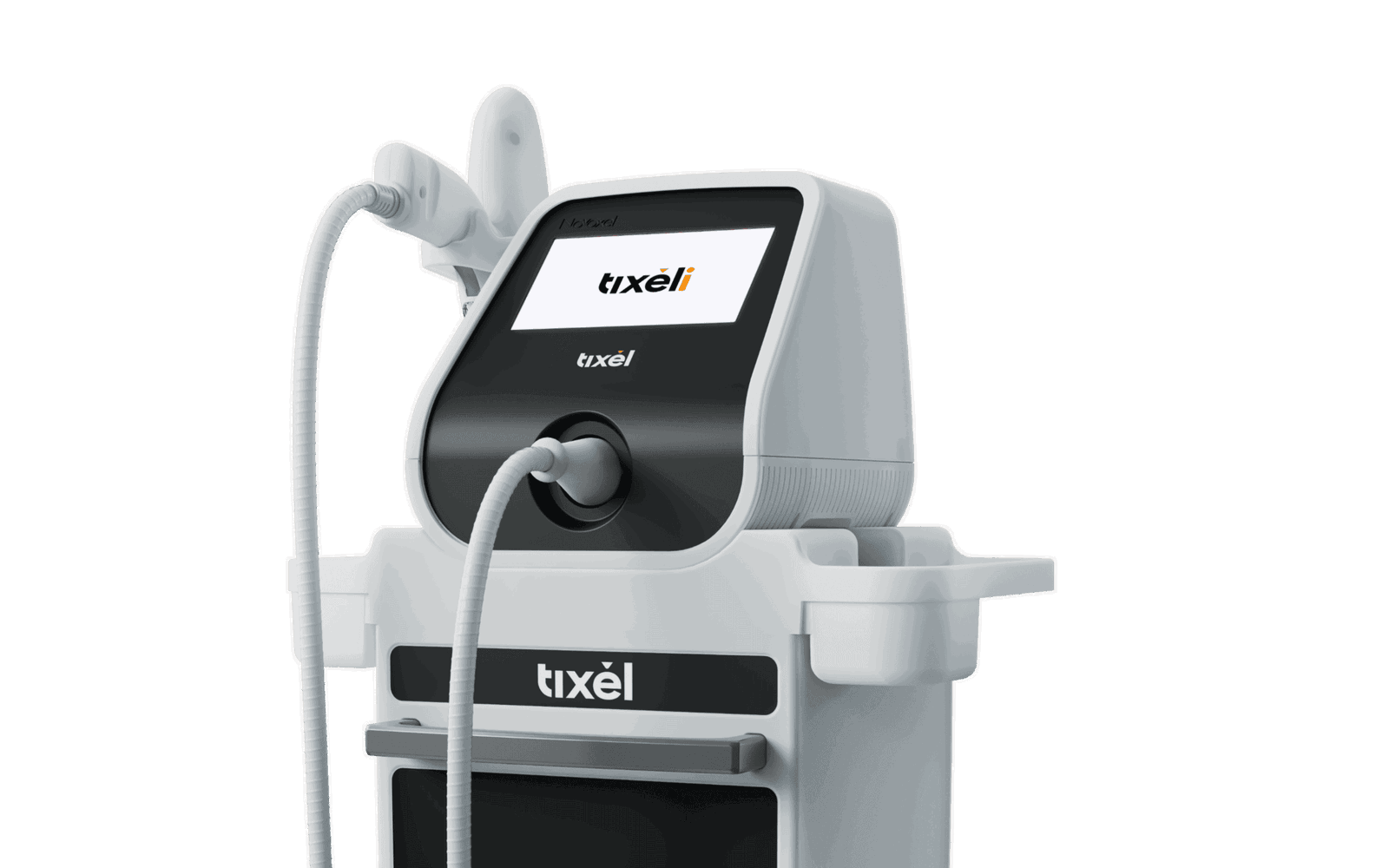
Tixel earns a place for completeness and an important clarification: it is not a red light or photobiomodulation device at all. It is a thermo-mechanical system that briefly touches a heated tip to the eyelid to treat meibomian gland dysfunction, and it is FDA-cleared for that use (Cataract & Refractive Surgery Today, 2024). If you are comparing dry-eye options your clinic offers, it is worth knowing about, but do not file it under light therapy.
Pros
- FDA-cleared for meibomian gland dysfunction
- Very short treatment time
Cons
- Not light therapy or photobiomodulation
- Clinic-only and per-session cost
- Uses controlled heat on the eyelid
It suits a dry-eye patient exploring clinic options who understands it is a heat treatment, not light.
Heat, not light Legitimate for MGD, but a different category.
Learn more at Novoxel See the dry-eye evidence
Not sure where to start?
Most readers do best matching a device to a single goal: dry-eye relief, or general retinal support. The buying guide below walks through what works, what does not, and how to choose safely.
Does red light therapy for your eyes actually work?
It depends on the condition, and being honest about that is the whole point of this guide. The mechanism is real: red and near-infrared light is absorbed by mitochondria in eye tissue, which can raise cellular energy and reduce oxidative stress, and a comprehensive review concludes the strongest clinical signals are for retinal conditions at 670nm and 850nm (Gaspari et al., 2024).
For dry AMD, the evidence is genuinely strong: the LIGHTSITE III trial showed a vision benefit and slower disease progression (Retina 2024).
For dry eye from blocked glands, the picture is also encouraging, with randomized data showing better tear stability and symptoms after light-based treatment (Giannaccare et al., 2023).
Now the part most guides skip. Light therapy is not a cure-all, and several uses have failed in good studies. The CLEOPATRA trial of a sleep-time light mask for diabetic macular edema found no benefit after two years (Lancet Diabetes & Endocrinology 2018). There is no good evidence that red light reverses wet AMD, restores reading vision lost to presbyopia, or clears floaters. When a device promises those things, that is marketing, not science.
Wavelengths and dose, in plain English
Two numbers do most of the work in eye light therapy: 670nm red and 810nm near-infrared. The 670nm band is the one studied in the University College London aging-eye research, while 810nm penetrates deeper tissue, which is why dual-wavelength devices cover more uses than single-wavelength glasses (Gaspari et al., 2024).
Dose is where good intentions go wrong. Light therapy follows a biphasic curve, which is a technical way of saying more is not better. Too little does nothing, and too much can cancel or reverse the benefit, with the gap between a helpful and an unhelpful dose sometimes as small as doubling it (Huang et al., Dose-Response 2009). This is the single best reason to choose a device with a fixed distance and a timer over a torch or a body panel you aim by hand.
Clinic versus at-home: what actually differs
The honest difference is dose control and evidence, not some secret ingredient. A clinic device like Valeda or eye-light delivers a calibrated dose under supervision, and it has been tested as that exact device in trials. A home wellness device gives you convenience and a one-time cost, but the dose is fixed by the manufacturer and the evidence usually comes from the general literature rather than a trial of the product in your hands.
Neither is automatically right. For a diagnosed retinal disease, the supervised, evidence-backed clinic route is the safer bet. For everyday maintenance of dry or aging eyes, a well-designed home device is reasonable, as long as you treat it as support rather than treatment and keep your eye doctor in the loop.
Is it safe, and who should not use it
Used at a controlled, low dose from a device built for the eyes, red and near-infrared light therapy has a good safety record, and a recent review found no adverse effects at typical therapeutic irradiance because red and near-infrared light does not trigger the photochemical damage pathway that blue light can (Gaspari et al., 2024).
That safety is conditional, and some people should not use these devices without medical advice. Talk to a doctor first if you have active cancer in the head or eye area, take photosensitizing medication, have photosensitive epilepsy, or have a serious retinal condition such as proliferative diabetic retinopathy. And never improvise: do not stare into a high-power skin panel, and do not exceed a device’s stated protocol, because the biphasic dose response means overdoing it works against you.
How red light therapy compares to proven treatments
Red light therapy is best understood as a complement, not a replacement, for treatments with decades of evidence. For wet AMD, anti-VEGF injections remain the standard of care and are far better established than any light device. For moderate-to-severe dry eye, prescription options like cyclosporine and lifitegrast, along with punctal plugs, have stronger evidence than any consumer gadget. Even Valeda, the most evidence-backed light device, is positioned for a specific stage of dry AMD, not as a substitute for the rest of eye care (Gaspari et al., 2024).
The practical takeaway: use light therapy alongside proven care, under a clinician, rather than instead of it.
How to choose the right device for you
Match the device to your situation and the choice gets easy.
- Diagnosed dry AMD, want the most proven option: ask your retina specialist about Valeda.
- Dry eye or blocked glands, want home maintenance: the dual-wavelength Spectral WaveFront, or a clinician-set my-mask, or clinic eye-light sessions.
- General retinal-aging support on a budget: a single-wavelength 670nm device like Eyepower Red, knowing the dose is lower and looser.
- Diabetic macular edema: stick with proven medical care; the light evidence here is negative.
- A rare inherited retinal disease: discuss research-stage options with a specialist rather than buying a consumer device on your own.
Frequently asked questions
Is red light therapy safe for your eyes?
Used at a controlled low dose from a device designed for the eyes, it has been well tolerated in clinical trials, with no adverse effects reported at typical therapeutic intensity (Gaspari et al., 2024). The danger is uncontrolled exposure, so stick to eye-specific devices and protocols and ask your eye doctor first.
Does red light therapy work for dry eyes?
For many people with dry eye from blocked oil glands, yes. Randomized data on low-level light therapy report improved tear stability and symptoms (Giannaccare et al., 2023). It supports the glands rather than curing the condition.
Can red light therapy help macular degeneration?
For dry AMD, there is real evidence: the FDA authorized the clinic device Valeda in 2024 based on a randomized trial showing a vision benefit (FDA, 2024). There is no good evidence it helps wet AMD, and home glasses are not proven for AMD.
What wavelength is best for red light therapy of the eyes?
The two most-studied wavelengths are 670nm red and 810nm near-infrared. The 670nm band is the one used in University College London aging-eye research (Shinhmar et al., Scientific Reports 2021), and 810nm reaches deeper tissue, so devices offering both cover more uses.
Should I keep my eyes open or closed during a session?
Follow the device’s instructions, because closed eyelids reduce the light reaching the eye surface and the maker sets the dose accordingly. Our own measurement found keeping the eyes closed cuts surface irradiance by 12 to 28% depending on wavelength, which is why protocol matters; see our eyes-open versus eyes-closed investigation.
How long until I see results?
Expect weeks to months, not days. Clinical protocols run over repeated sessions across weeks to months, and the benefits are modest and supportive rather than dramatic. Any device promising overnight vision improvement is overselling.
Are red light therapy eye devices FDA approved?
Almost none are. The only device with FDA authorization for an eye condition is Valeda, for dry AMD (FDA, 2024). Tixel is FDA-cleared for dry eye but is a heat device, not light. Consumer glasses and masks are sold as wellness products.
Can red light therapy damage your eyes?
At the low, controlled doses used by eye-specific devices, no damage has been reported in trials, but the dose response is biphasic, so too much light can be counterproductive (Huang et al., Dose-Response 2009). The real risk is using an uncalibrated panel or torch at high power.
Is red light better than blue light for the eyes?
For therapy, red and near-infrared light is the studied option, and unlike blue light it does not drive the photochemical pathway linked to retinal stress (Gaspari et al., 2024). Blue-light management is a separate topic about screens and filters.
Who should avoid red light therapy for the eyes?
Anyone with active cancer in the head or eye area, photosensitive epilepsy, photosensitizing medication, or a serious retinal condition should not start without medical advice. When in doubt, ask an eye-care professional before buying any device.
The bottom line
The best eye red light device is the one that fits your eyes and your budget, not the one with the loudest ad. For at-home use, the Spectral WaveFront is the strongest all-rounder, with Eyepower Red a sensible budget choice and clinician-guided masks like my-mask the best-supported for dry eye. For a diagnosed condition such as dry AMD, the clinic options carry the most evidence, and your eye doctor is the right person to ask about access. Whatever you choose, treat it as support alongside proven care, respect the dose, and keep a professional in the loop. If you prefer the glasses or goggles form factor, see our dedicated red light therapy glasses guide. For the science behind each use, read our research reviews, and as we publish individual deep-dive device reviews we will link them here.
This guide is an educational review of published evidence and manufacturer data. It is not medical advice and does not create a doctor-patient relationship. Always talk to a qualified eye-care professional before starting any light-based therapy.
More from the Institute
Spectral WaveFront Review (2026): An Honest Assessment
An independent, criteria-scored review of the Kyper Spectral WaveFront red light eye mask: what the 670nm and 810nm evidence actually…
 Emerging
Does Red Light Therapy Help Ocular Rosacea?
The evidence on light therapy for ocular rosacea: what combined IPL and low-level light studies show, why red light is…
How to Get Rid of a Stye (and When to See a Doctor)
How to get rid of a stye fast and safely: the warm-compress routine that works, what to avoid, what causes…