Blue Light Glasses for Kids: Do They Help?
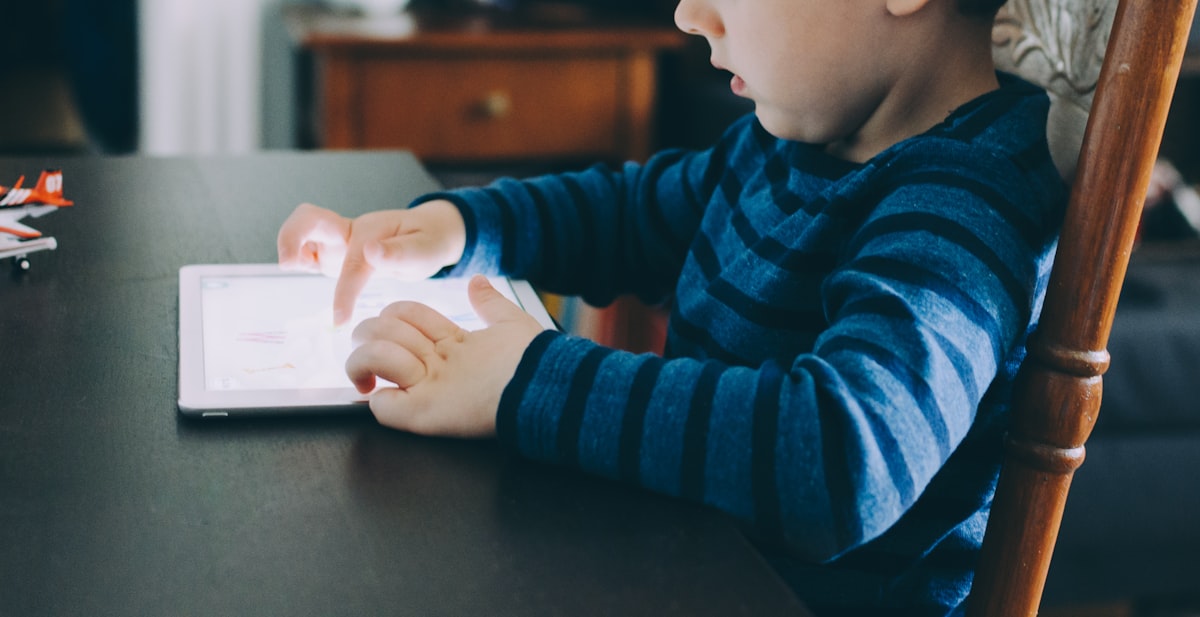
Children do not need blue light glasses, and the evidence does not show they help. There is no good evidence that screen blue light harms children’s eyes or that filtering glasses reduce eye strain, and eye doctors do not recommend them. What genuinely matters for kids around screens is different and, encouragingly, free: sensible screen habits, regular breaks, eye exams, and time outdoors, which is the one habit with real evidence for protecting children’s vision. This guide explains what helps and what does not.
This is general educational information, not medical advice. We sell no eyewear.
Do kids need blue light glasses?
No. The same evidence that applies to adults applies to children: blue-light filtering lenses have not been shown to reduce eye strain or improve sleep, and the largest review found little or no benefit (Singh et al., Cochrane, 2023).
The American Academy of Ophthalmology does not recommend blue light glasses for anyone, because there is no good evidence that screen blue light damages the eyes (American Academy of Ophthalmology).
They are not harmful, so a child who already has a pair is fine wearing them. They simply are not doing the protective job the marketing implies, and they are not a substitute for the habits that actually matter.
Why blue light glasses are marketed for kids
The pitch is intuitive: children spend more time on screens than ever, screens emit blue light, so filtering it must protect their developing eyes. Each step sounds reasonable, which is why the products sell. The problem is the conclusion does not hold, because the blue light from screens is far below harmful levels and is not the cause of the tiredness or discomfort children feel after long screen sessions.
That discomfort, when it happens, is digital eye strain, and it comes from the same things it does in adults: long unbroken focus, reduced blinking, and glare. Filtering blue light does not address any of those, which is why the glasses do not deliver.
What actually protects children’s eyes
The measures that matter are behavioural and, for vision development, well supported. Encourage regular screen breaks using the 20-20-20 rule, looking at something 20 feet away for 20 seconds every 20 minutes, make sure lighting is comfortable and the screen is not too close, and keep up with routine eye exams so any real vision problem is caught early.
The standout, evidence-backed habit is time outdoors. A randomized trial found that adding 40 minutes of outdoor activity at school cut the three-year incidence of myopia in young children from 39.5% to 30.4% (He et al., JAMA 2015). That is a real, measurable protective effect on children’s vision, and it does far more than any pair of glasses marketed for screens. We cover that lane in our myopia review.
What about screen time and sleep?
Parents often worry that evening screens disrupt children’s sleep, and there is a real basis for the general concern that bright, blue-rich light in the evening can affect the body clock. But the fix is not filtering glasses, whose sleep benefit is unproven (Singh et al., Cochrane, 2023); it is reducing screen use before bed and dimming devices at night.
Practical evening habits beat eyewear here: set a screen curfew before bedtime, use device night modes, and keep screens out of the bedroom. Those reduce the light actually reaching a child’s eyes, which a lightly tinted lens does not meaningfully do.
How much screen time is too much?
There is no single magic number, and the practical answer is less about a strict limit than about balance and habits. Major pediatric guidance leans toward keeping screens out of the youngest children’s routines, setting consistent daily limits as they grow, and protecting sleep and outdoor time rather than policing every minute. The goal is that screens do not crowd out the things that matter for developing eyes and bodies.
For eyes specifically, the useful framing is that what a child does away from screens, especially getting outdoors, matters as much as how long they spend on them. A reasonable screen limit paired with daily outdoor play is a far better eye-health strategy than any pair of glasses, and it costs nothing.
If your child has eye strain or headaches
If a child genuinely struggles with eye strain, headaches, or blurry vision around screens, the right move is an eye exam, not blue light glasses. The most common hidden cause is an uncorrected vision problem that needs a real prescription, and only an eye-care professional can find it. Persistent symptoms always deserve a proper look rather than an over-the-counter fix.
Frequently asked questions
Do kids need blue light glasses?
No. There is no good evidence they protect children’s eyes or reduce eye strain, and eye doctors do not recommend them (American Academy of Ophthalmology). They are harmless but unnecessary.
Does screen blue light damage children’s eyes?
There is no good evidence that it does; the levels from screens are far below harmful, which is a main reason the glasses are not recommended (American Academy of Ophthalmology).
What actually helps kids’ eyes with screens?
Screen breaks, comfortable lighting, routine eye exams, and especially time outdoors, which a trial showed reduced myopia incidence in children (He et al., JAMA 2015). These do far more than filtering glasses.
Will blue light glasses help my child sleep?
Unproven. The sleep benefit of blue-light glasses has not been shown (Singh et al., Cochrane, 2023). Reducing evening screen time and dimming devices work better.
My child gets headaches from screens, what should I do?
Get an eye exam. The common cause is an uncorrected vision problem needing a real prescription, which glasses marketed for blue light will not fix. Persistent symptoms need a professional diagnosis.
The bottom line
Kids do not need blue light glasses; the evidence shows no proven benefit, and eye doctors do not recommend them, though they are harmless to wear. What actually protects children’s eyes is free and well supported: screen breaks, good lighting, routine eye exams, and above all time outdoors, which has real evidence for lowering myopia risk. If a child has ongoing eye strain or headaches, an eye exam beats any filtering lens. For more on the screen blue-light question, see our do blue light glasses work guide and our myopia review; if you decide you want a pair anyway, our blue light glasses buying guide covers choosing on quality.
This guide is educational and not medical advice. It does not create a doctor-patient relationship. See a qualified eye-care professional for a child’s persistent eye symptoms.
More from the Institute
 Mixed
Mixed
Does Red Light Therapy Help Diabetic Retinopathy?
The largest trial of light therapy for diabetic eye disease found no benefit. What CLEOPATRA showed, why early hopes faded,…
 Investigation
PBM: Eyes Open or Eyes Closed?
An Institute investigation: keeping the eyes closed during 600–1000 nm photobiomodulation reduces energy received at the eye surface by 12–28%,…
 Insufficient
Does Red Light Therapy Improve Eyesight?
Can red light therapy improve eyesight? It will not replace glasses or fix blurry vision, but research shows 670nm light…